
Police in Hazaribagh, Jharkhand, have arrested a mother, an occult practitioner, and a man in connection with the sacrificial ritual killing of a teenage girl. The arrests follow an investigation into the girl's death, initially reported as a rape and murder.

The BJP has criticised West Bengal Chief Minister Mamata Banerjee, calling her a 'symbol of anarchy' after the Supreme Court questioned her actions during an ED search. The party claims her 'jungle raj' will end with the TMC's defeat in the upcoming assembly polls.
Police in Hazaribag, Jharkhand, have arrested a mother, an occult practitioner, and a man in connection with the ritualistic killing of a teenage girl. The girl was allegedly strangled as a sacrifice to cure the mother's ailing son.

The Jharkhand High Court has taken suo motu cognisance of the alleged rape and murder of a 12-year-old girl in Hazaribag district, demanding responses from state officials and police regarding the ongoing investigation and lack of arrests.
Justice Bhushan Ramkrishna Gavai, India's 52nd chief justice and its first Buddhist one, has played a key role in shaping the judicial landscape, penning about 300 verdicts, including landmark rulings on constitutional issues, liberty, and perhaps most important against the executive's 'bulldozer justice'.

The Punjab and Haryana High Court has acquitted AAP MLA Manjinder Singh Lalpura and seven others in a 2013 molestation and assault case after a compromise was reached between the involved parties.

The Allahabad High Court has ruled that a divorce under Mohammedan Law is effective from the date 'talaq' is pronounced, with a court decree simply confirming the divorce.
The Supreme Court of India has stayed the execution of a man convicted of sexually assaulting and murdering a five-year-old girl in Madhya Pradesh in 2024, pending further investigation and review of the case.
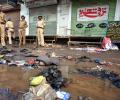
The Bombay High Court has discharged four accused in the 2006 Malegaon blasts case, criticising the NIA for ignoring evidence collected by the previous investigating agency. The court's decision leaves the question of responsibility for the blasts, which killed 31 people, unanswered.
The Allahabad High Court dismissed a petition by an advocate seeking quick disposal of a maintenance case against his wife, calling it 'vexatious' and imposed a significant fine for concealing facts and misusing his wife's funds.

The Madras High Court has raised concerns about actor Vijay's film 'Jana Nayagan', citing references to foreign powers creating conflict in India and potential communal disharmony. The court has set aside an order to grant the film a censor certificate, pending further review.
The Delhi High Court has dismissed Christian Michel James's petition for release in the AgustaWestland VVIP chopper scam case, upholding his continued detention.

The Supreme Court of India has granted permission for passive euthanasia for a 32-year-old man who has been in a coma for over 12 years, authorising the withdrawal of his artificial life support.

The Supreme Court has criticised the Gurugram Police and a magistrate for their handling of a four-year-old rape victim's case, demanding the presence of key officers and investigation records in court.
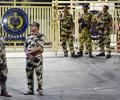
The Allahabad High Court has overturned the death sentence of an accused in the 2016 murder of an NIA officer and his wife, citing doubts in the prosecution's case and questionable conduct of witnesses.
The Kerala High Court has upheld the life sentence of five BJP activists for the murder of a CPI(M) worker in Kannur in 2006, affirming the trial court's decision and highlighting the political rivalry behind the crime.

The Delhi High Court has questioned the blanket ban on protests and demonstrations on the Delhi University campus, seeking justification from the university and Delhi Police. The court acknowledged the need for balance but emphasized that a complete prohibition is likely untenable.
The Supreme Court questioned Justice Yashwant Varma regarding his plea to invalidate an in-house inquiry panel report that indicted him after a large amount of burnt cash was discovered at his official residence during his time as a Delhi High Court judge.

The Punjab and Haryana High Court is considering a plea regarding incarcerated MP Amritpal Singh's absence from Parliament, which has reached 59 sittings. The court has been informed that Singh can apply for condoning his absence, as continuous absence for 60 sittings could lead to his seat being declared vacant.

The Bombay High Court has overturned orders that blocked an open inquiry into a former Pune municipal official's alleged disproportionate assets, paving the way for a probe into assets worth around 2,000 crore.

The Supreme Court has requested a response from the Manipur State Legal Authority regarding the appointment of legal aid counsel for two women allegedly paraded naked during the 2023 ethnic clashes in Manipur. This follows a plea from the CBI against the Gauhati High Court's decision to grant bail to two accused in the case.

The Uttarakhand High Court reprimanded Deepak Kumar, known as 'Mohammad Deepak', for seeking police protection while being investigated in connection with a clash over a shop name.
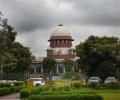
The Supreme Court ensured a widow received compensation 23 years after her husband's death in a train accident, highlighting the court's commitment to justice for the poor.

The Supreme Court dismissed Allahabad High Court judge Yashwant Varma's plea seeking invalidation of a report that found him guilty of misconduct in the cash discovery row.
The Supreme Court has reserved its verdict on a petition challenging the Special Intensive Revision (SIR) of electoral rolls in Bihar, following arguments from various lawyers and the Election Commission of India.

The ruling virtually makes the fate of the film, originally slated for a Pongal release earlier this month, uncertain.

The Bombay High Court has directed HDFC Bank to refund Rs 38 lakh to a Pune businessman who lost the amount in a digital fraud, citing the account holder's lack of fault and RBI guidelines on customer protection.

The Supreme Court on Friday said the plea seeking a policy for verification of electronic voting machines should go before the same bench that delivered a verdict in April rejecting the demand for bringing back the old paper ballots.

The court is hearing appeals against a CCI order imposing a penalty on Meta and WhatsApp.

Actor Vijay has requested a delay in his CBI questioning regarding the Karur stampede case, citing political engagements. The CBI is also seeking to question Karur MLA V Senthil Balaji.

Gurugram police have arrested three individuals, including two female domestic helpers and their male accomplice, in connection with the alleged sexual assault of a 3-year-old girl. The arrests follow a Supreme Court decision to hear a plea for a CBI or SIT investigation into the case.

The BJP has criticised Rahul Gandhi for his delayed response to the killing of a 26-year-old man in Uttam Nagar, Delhi, accusing him of hypocrisy and pandering to vote bank politics. BJP leaders allege Gandhi is attempting to whitewash the incident and protect the perpetrators.
The ruling virtually makes the fate of the film, originally slated for a Pongal release earlier this month, uncertain.

The Supreme Court has granted bail to a doctor arrested for allegedly tampering with blood samples in the Pune Porsche crash case, where a minor is accused of killing two people.
The Supreme Court has criticised the Gurugram Police's handling of a three-year-old rape victim's case, citing an 'insensitive' approach and ordering key officials to appear before the court with all investigation records.

Former NCB Mumbai zonal director Sameer Wankhede has denied demanding or accepting a bribe from Shah Rukh Khan to exonerate his son Aryan Khan in the 2021 cruise ship drugs case. His counsel argued before the Bombay High Court that the CBI lacks evidence to support the bribery allegations.

The Supreme Court has granted bail to Vishal Agarwal, the father of the minor accused of driving the Porsche in the fatal Pune crash, in connection with the blood sample swapping case.

The Supreme Court of India has granted bail to Kashmiri separatist leader Shabir Ahmed Shah, who has been in jail for over eight years in a terror funding case, citing the unlikelihood of a timely trial conclusion and the curtailment of personal liberty.
The Bombay High Court has ruled that accepting a bribe constitutes acquiring proceeds of crime, denying relief to a former municipal official arrested in a money laundering case.

The Supreme Court is reviewing the detention of climate activist Sonam Wangchuk under the National Security Act, considering his health condition and allegations of inciting unrest in Ladakh.
